Italy: The Libero Era
The word catenaccio carries a faint whiff of cowardice in English — the bolt thrown across the door, the refusal to open up. This is an injustice. Practised at its highest, the system demanded as much intelligence, courage, and physical authority as any expansive formation. It simply applied those qualities in a different register: not to create space, but to deny it, and to punish the opponent's frustration with the clinical precision of a surgeon.
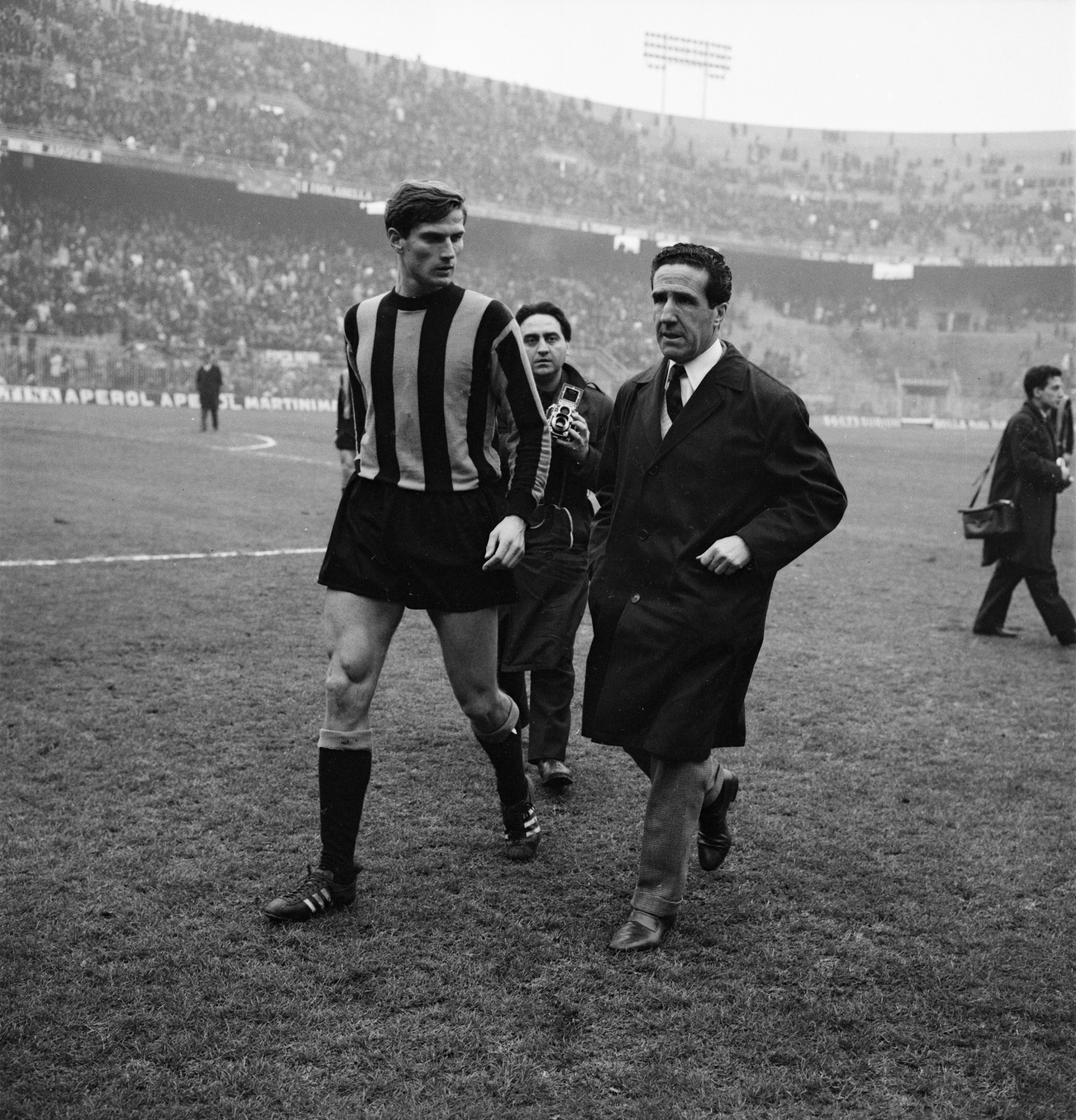
The system emerged from the Italian regional game in the 1940s and 50s, codified by coaches like Nereo Rocco and Giuseppe Viani, but it was Helenio Herrera's Grande Inter that elevated it to its most articulate expression. The libero — the free man sweeping behind the defensive line — was not a negative invention. Armando Picchi, the archetypal libero at Inter, read the game with the anticipatory intelligence of a chess grandmaster, intercepting danger before it fully formed and distributing with a calm that turned defence into counter-attack in a single touch.
The misunderstood figure in the catenaccio mythology is Giacinto Facchetti. A left-back who scored 59 Serie A goals. A defender who attacked with the conviction of a striker, operating on the overlap before overlapping runs had been theorised. His existence within Herrera's structure proved that the system was not a cage but a framework — a set of responsibilities that, fulfilled by the right players, created freedom elsewhere. The other team was so occupied dealing with Facchetti's advancing runs that defensive solidity became, paradoxically, an attacking weapon.
What killed catenaccio was not any tactical innovation but the evolution of the pressing game — the recognition that controlling space before the ball is lost is more efficient than retrieving it after the fact. But its legacy endures in every defensive midfielder who reads a line of pressure and steps in front of it, in every sweeper-keeper who plays from the back. The bolt-throwers of Milan and Turin left deeper marks on the tactical genome than their detractors have ever conceded.